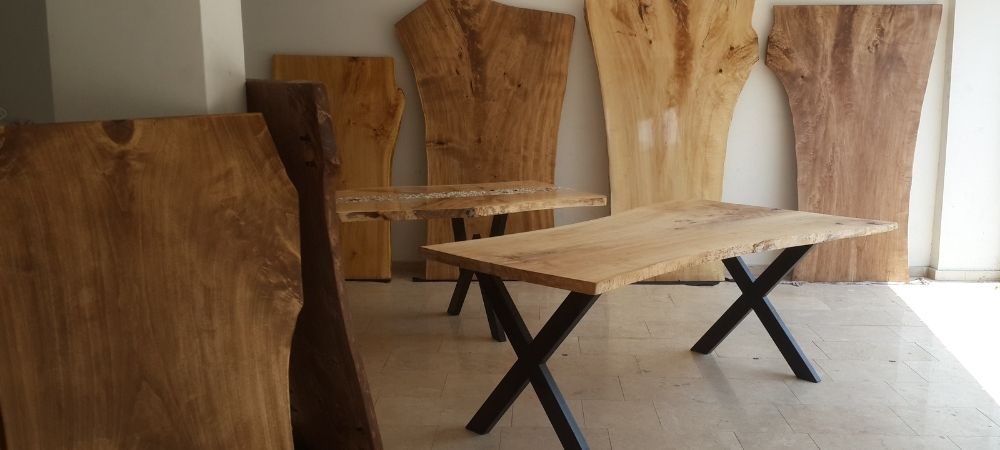
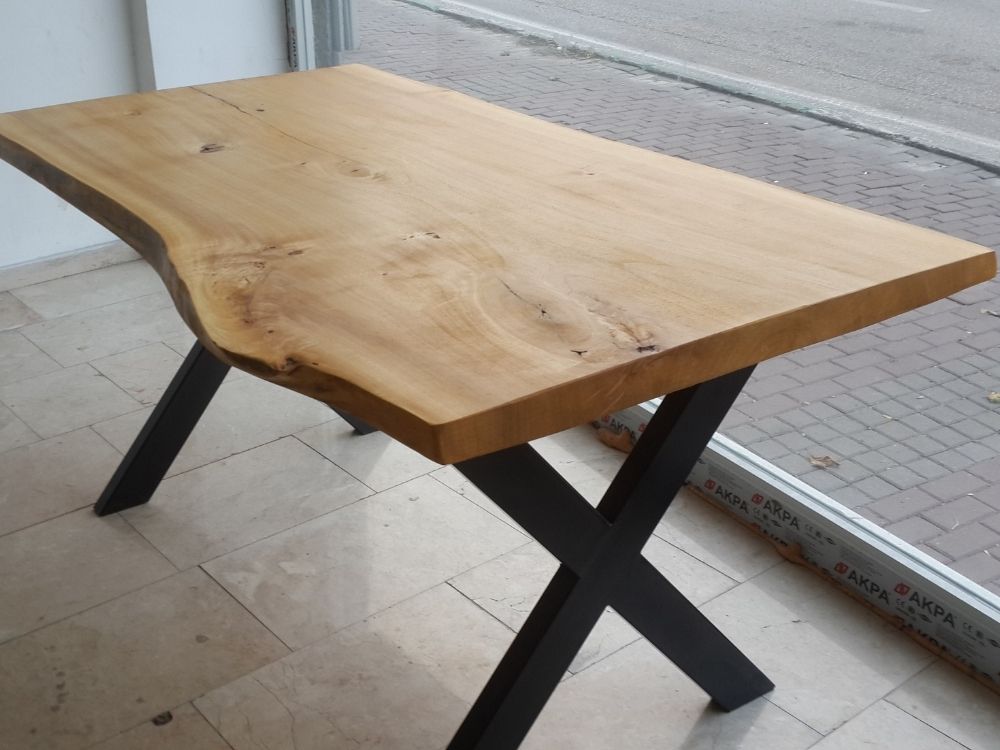
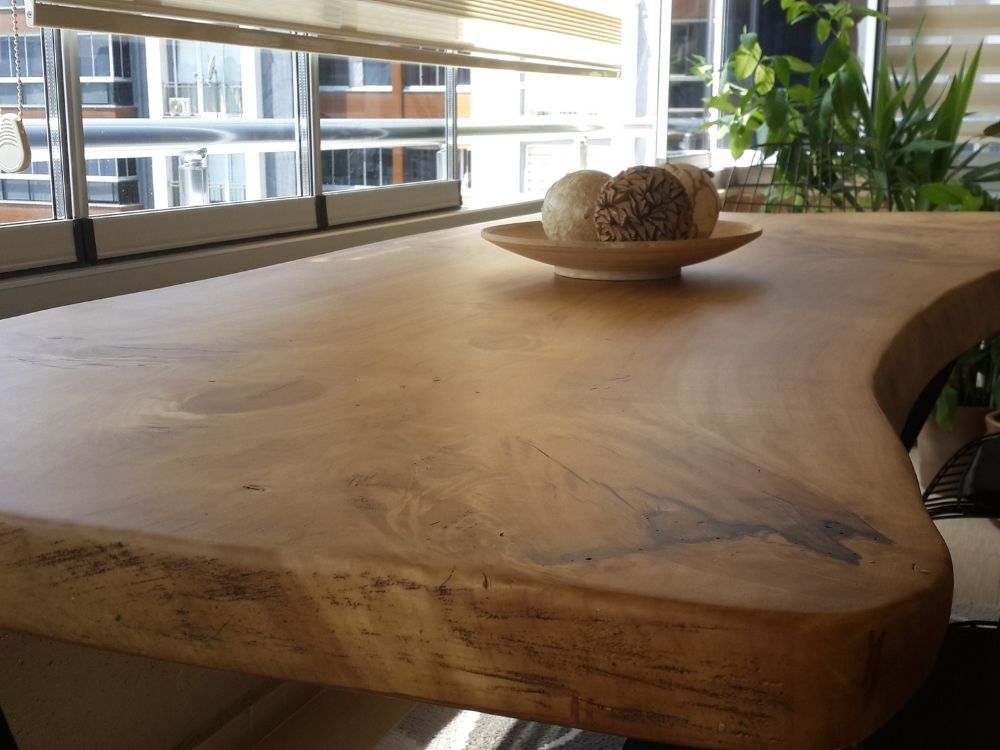
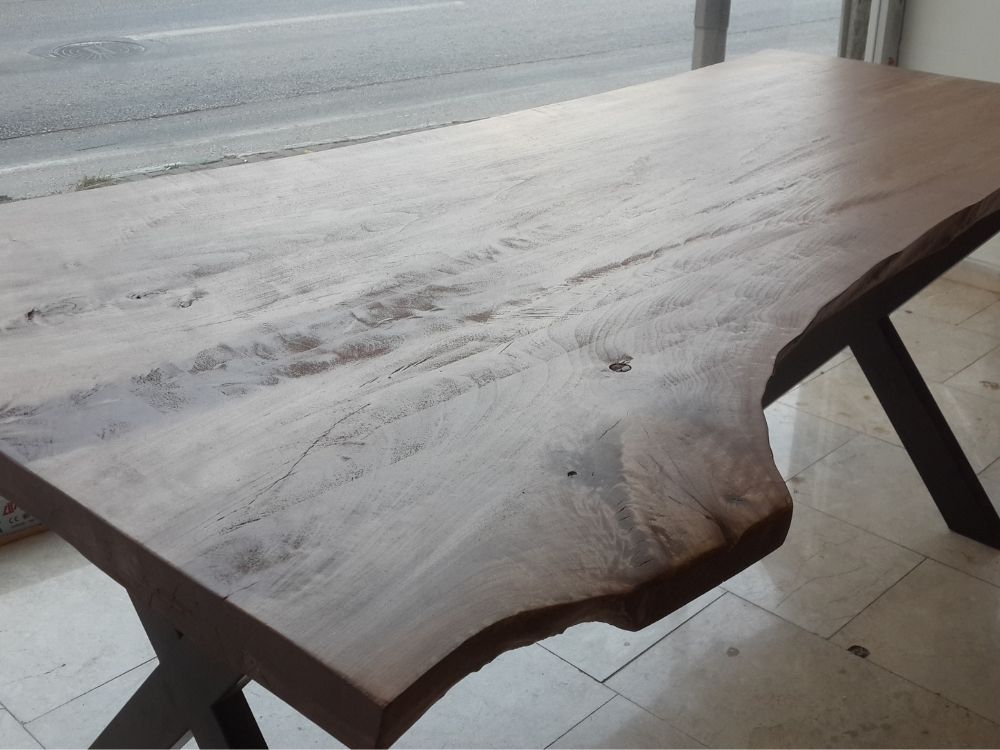
Wooden log tables have become one of the most popular pieces of furniture in recent years due to their natural beauty and durability. The production of these tables starts with the right choice of wood and requires meticulous craftsmanship. Let's briefly explain the production process.
Tree Selection and Preparation
The type of wood to be used in the construction of the log table is critical for the durability and aesthetics of the table. Hard and grained woods such as oak, walnut, olive and ash are ideal choices for log tables. Once the wood is selected, the bark is peeled off and the log is cut into planks, preserving its natural shape. This cutting process is one of the most important stages that determines the final look of the table.
Drying and Forming
The cut slabs cannot be processed immediately. The moisture naturally contained in the wood must be removed. This process can take anywhere from 6 months to 2 years, depending on the type of wood. The drying process prevents the wood from cracking and warping. This process can be shortened by modern methods such as kiln drying, which is preferably preferred despite its high cost. Once the wood is completely dry, the sanding stage begins. This is done to smooth the surface of the log and reveal the grain structure. The sanding is repeated with progressively finer-grained sandpaper. Cracks and gaps, if any, are then filled with epoxy resin. This resin not only adds strength to the table, but also creates an aesthetic detail when used in different colors.
Finishing and Preservation
Finally, the surface of the table is coated with protective oils or varnishes. This coating protects the wood from moisture, stains and scratches, as well as bringing out the natural color and luster of the wood. The end result is a unique, natural and long-lasting log table. The distinctive form and grain structure of each log makes each table unique and one-of-a-kind.
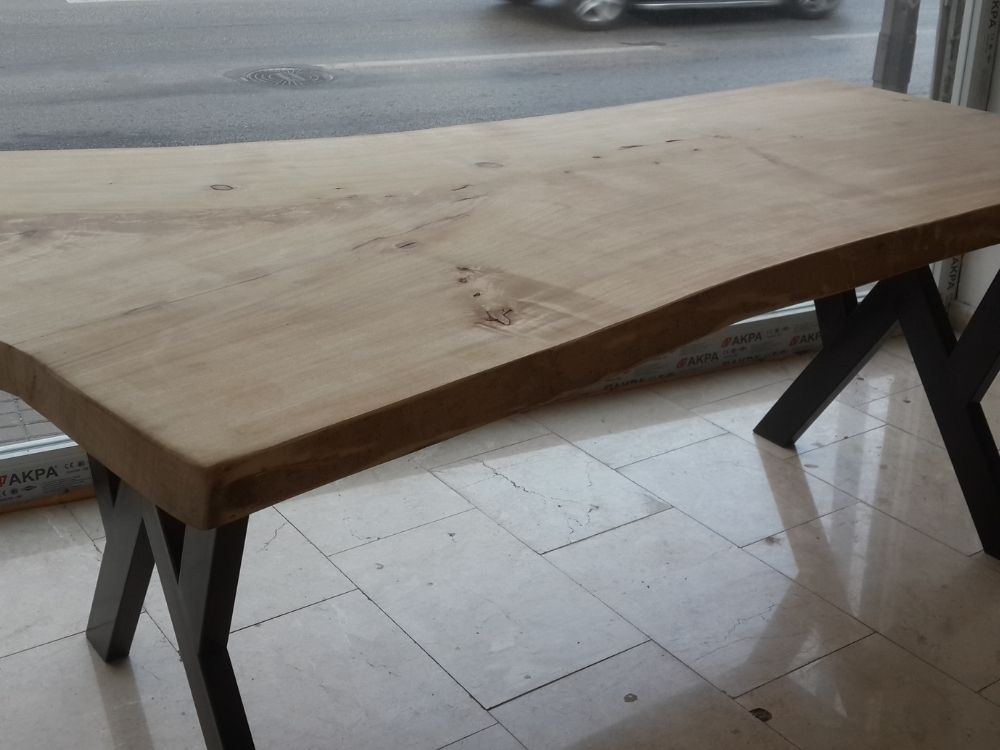
Width : 90cm Length: 197cm Thickness: 5.5cm One piece. Made of Ukrainian Mazel wood. It has been subjected to oven drying process. The surface is covered with silk matt varnish.
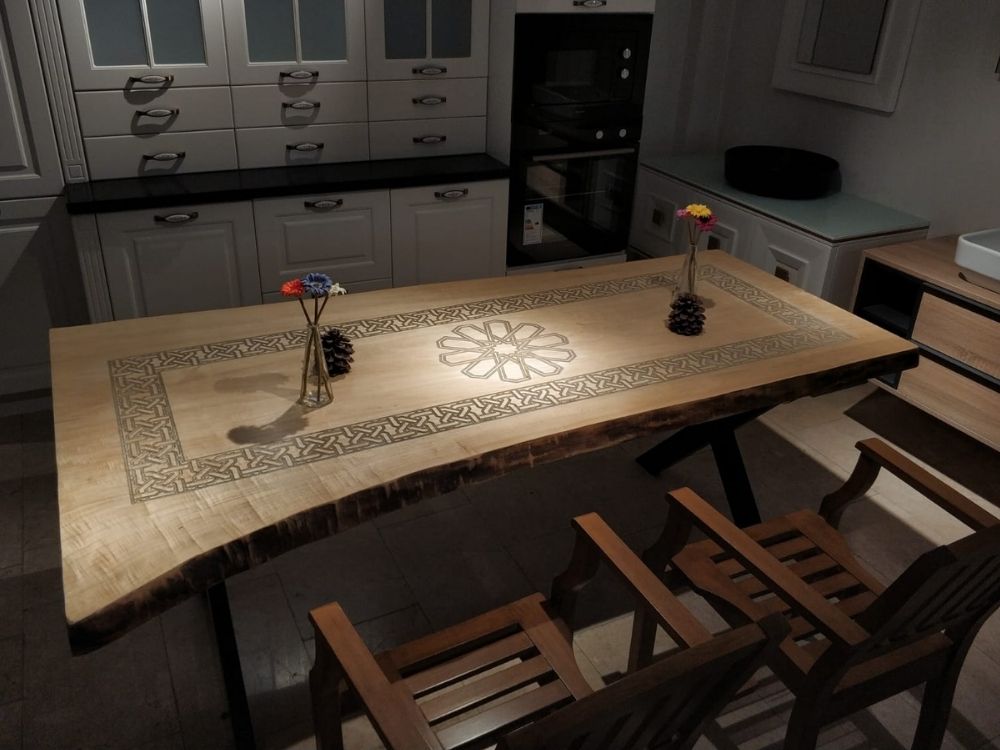
Width : 90cm Length : 195cm Thickness: 5.5cm It is produced from Ukrainian mazel wood by oven drying process. Ottoman pattern carving was made on it and silvery mother of pearl epoxy filling was made. one piece wooden table. Surface coating with silk matte varnish.
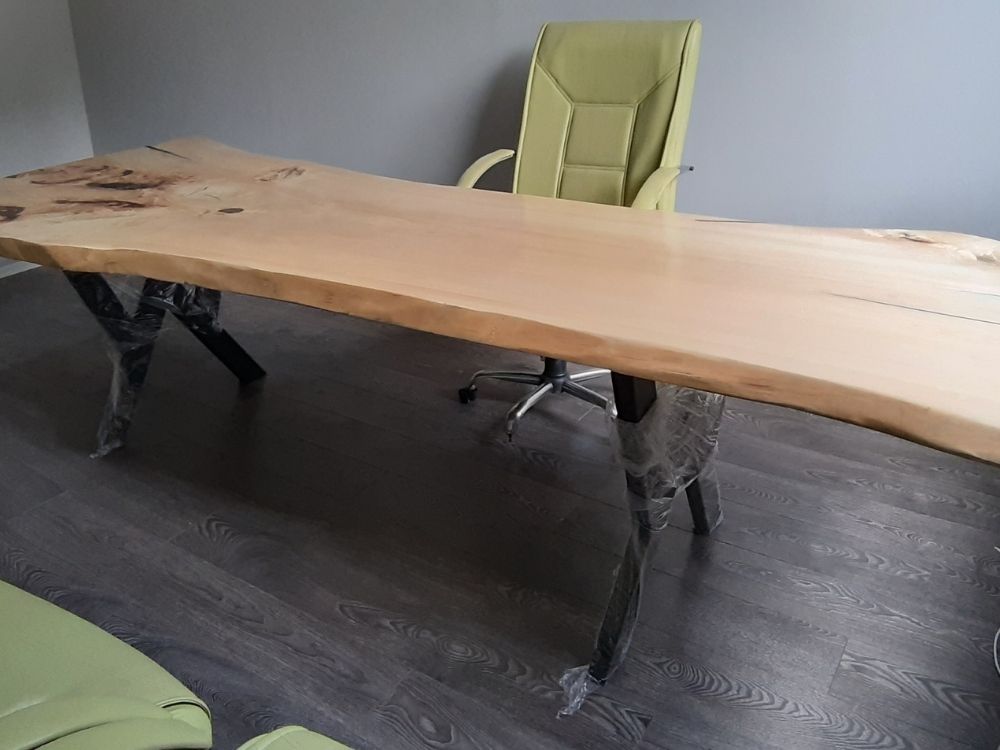
Width : 95cm Length : 255cm Thickness: 6cm The desk is made of Ukrainian mazel wood in one piece and coated with glossy varnish on the surface.
Width : 85cm Length : 152cm Thickness: 5cm Made of one piece of Ukrainian mazel wood. The surface is coated with silk matt varnish
Width : 80cm Length: 160cm Thickness: 5.5cm One piece. Made of Ukrainian Mazel wood. It has been subjected to oven drying process. The surface of the desk is covered with silk matt varnish.
Width: 90cm Length: 187cm Thickness: 5.5cm Made of Ukrainian Mazel wood in one piece. The surface is coated with silk matt varnish.